Menu
2026
Self-Initiated
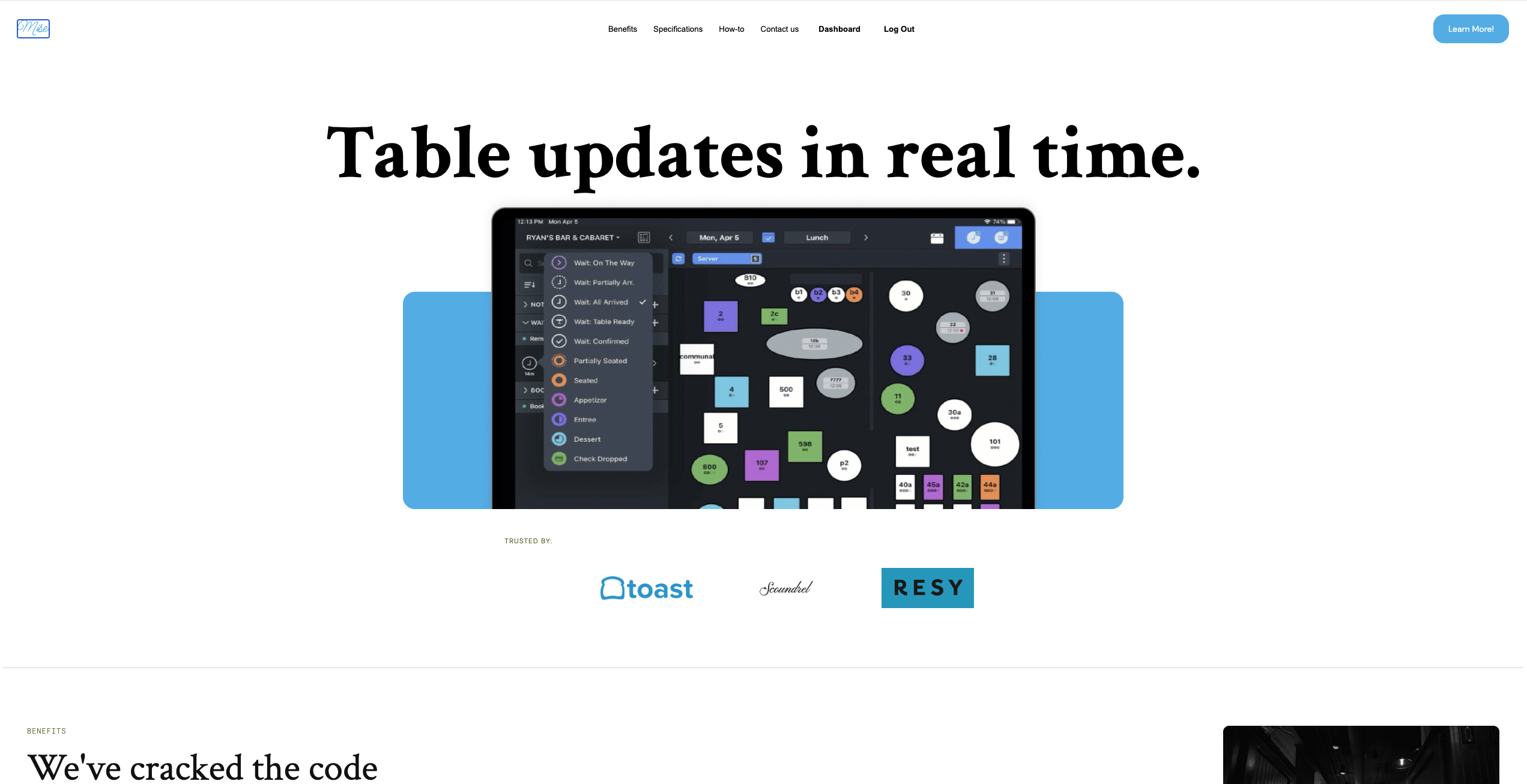
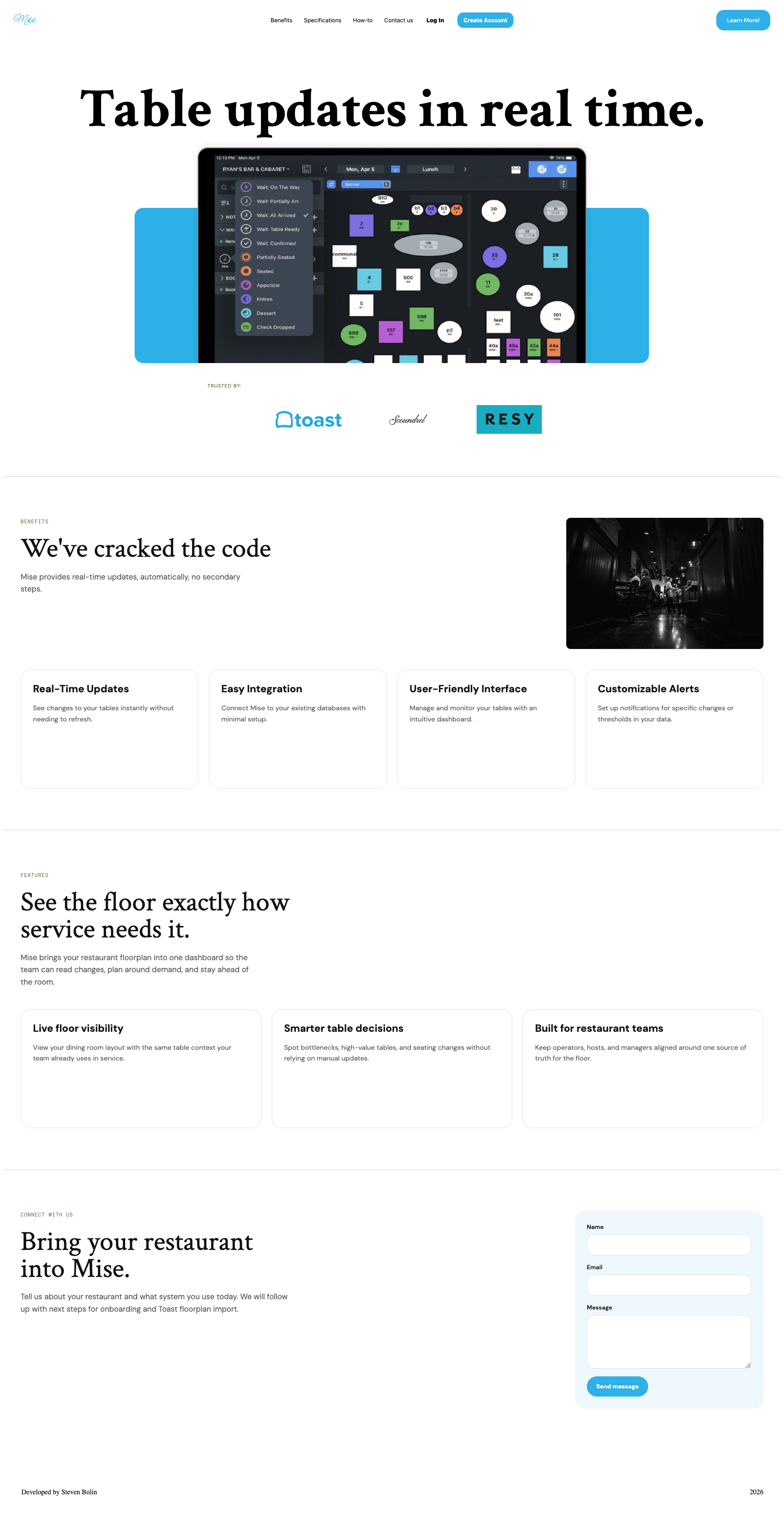
Mise is a React-based restaurant operations app that pulls a floor plan from a POS API and updates table status in real time when service events are fired. Core idea: course events can drive table state changes automatically (for example appetizers, entrees, dessert) servers should not need to manually update every status during service host and front-of-house can see more accurate live table state manual override remains available when delayed or incorrect data appears.
Current integration direction: Toast for POS floor plan and table events Resy as a future reservation-system integration backend + websocket architecture so APIs can communicate in real time and keep a live connection open
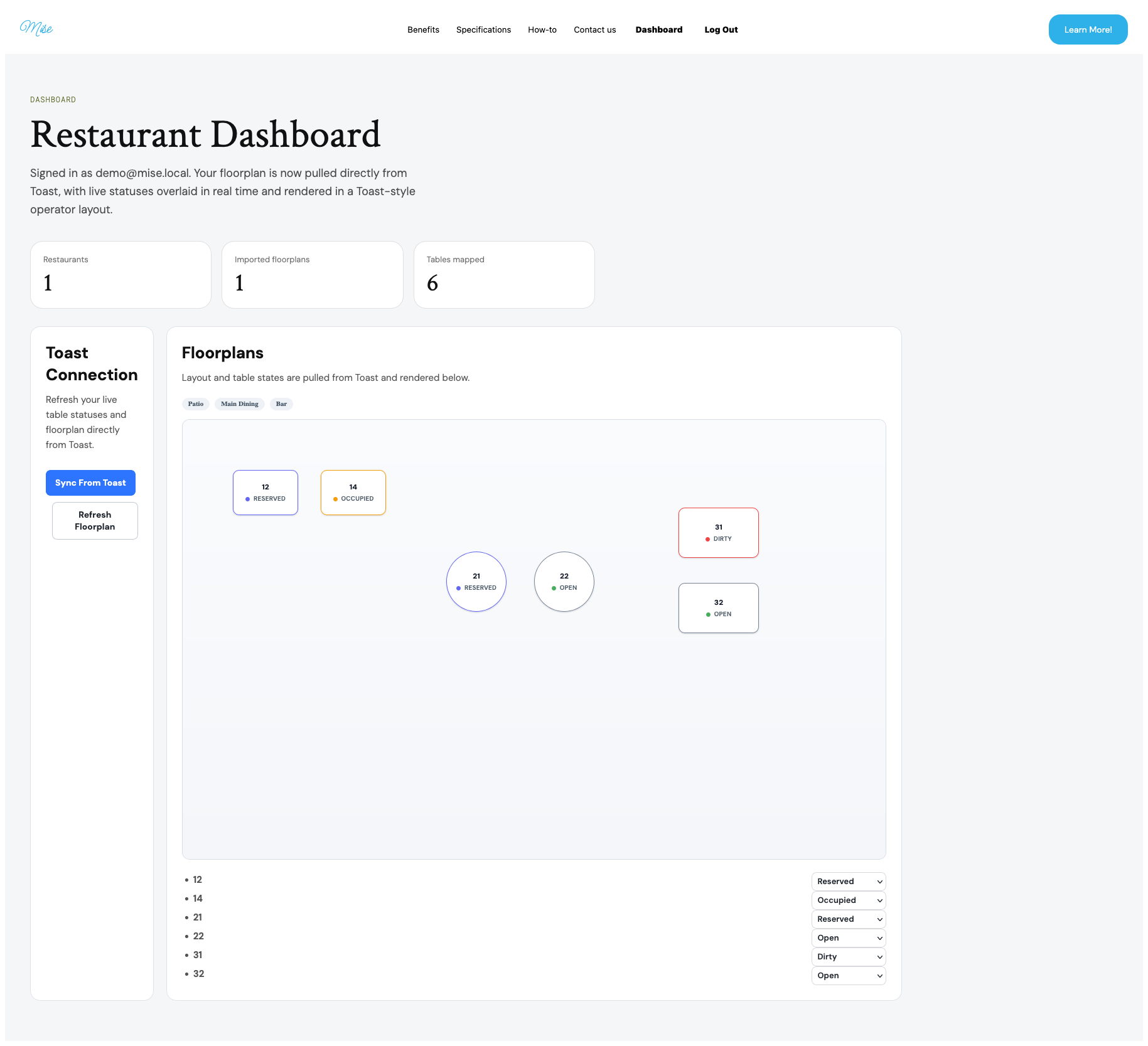
You've built something genuinely ambitious here — a real-time restaurant operations dashboard with websocket integration, Toast POS sync, auth, and protected routes is well beyond a typical Stage 1 scope. The architectural thinking on display (separation of concerns in utils/, BEM naming, reusable Modal/ModalWithForm composition) shows real growth as a developer. What Went Right Solid React fundamentals. Hooks are used correctly throughout, state initialization uses proper types, and the component structure is clean and well-organized. - Excellent component reuse. The Modal → ModalWithForm → LoginModal/SignUpModal composition is exactly the kind of layered reuse the checklist asks for. Proper memory management. Your modal Escape-key listener and the realtime socket in the Dashboard both clean up correctly on unmount — this is something many students miss. Routing works. Two routes, a protected route, and a catchall fallback are all in place. - Good API hygiene at call sites. Every place that consumes a fetch promise handles errors gracefully and surfaces user-facing messages. Responsive design effort. Multiple breakpoints across most CSS files show genuine attention to smaller screens. BEM, alt text, and clean naming are applied consistently — the codebase is pleasant to read.
- Lindelwe